


Have you ever had a 40-foot high-cube container of wet wipes sitting at the Port of Santos in Brazil, racking up demurrage fees while you scramble for a single missing stamp? If you’ve been in the South American import-export game for a while, that scenario probably gave you a slight shiver.
Importing to South America (LATAM) isn’t just a business transaction; it’s a high-stakes dance with bureaucracy. As a manufacturer that has shipped millions of packs across the Atlantic, we’ve seen it all. We know that the difference between a profitable quarter and a logistical disaster often boils down to a few sheets of paper. Why is the paperwork so dense? Because in the world of hygiene and sanitary products, South American regulators—like ANVISA in Brazil or INVIMA in Colombia—are the ultimate gatekeepers of public health.
In this guide, we’re going to pull back the curtain. We’ll look at the “Golden Folder” of documents every importer needs and explore the specific hurdles of 2026. Ready to make your supply chain as smooth as a fresh baby wipe? Let’s dive in.
The South American Customs Labyrinth: Why Paperwork is Your Best Friend
Customs in South America is famous for being “meticulous.” That’s a polite way of saying they will find the one typo in your 50-page manifesto and use it to halt your cargo. But here’s the thing: they aren’t just being difficult. Most wet wipes—whether they are for babies, makeup removal, or disinfecting surfaces—fall under the category of “cosmetics” or “sanitary products.”
This means they touch human skin or food-contact surfaces. Consequently, the regulatory bodies are obsessed with safety. If you view your documentation as a “safety passport” rather than a “bureaucratic hurdle,” your mindset shifts. You stop trying to bypass the system and start mastering it.
The “Golden Trio” of Certifications
Before we even talk about specific countries, there are three “Master Keys” that every reputable wet wipes manufacturer must provide. If your supplier can’t produce these instantly, you aren’t just taking a risk—you’re likely walking into a trap.
1. GMP (ISO 22716): The Foundation of Trust
Good Manufacturing Practice (GMP) is the global gold standard. In the LATAM region, authorities want to know that the factory where your wipes were produced isn’t just a shed with a mixing vat. They want to see clinical-level cleanliness, tracked batches, and rigorous quality control. Without a valid GMP certificate, your import process is dead on arrival in countries like Chile or Argentina.
2. FSC (Free Sale Certificate): The Golden Ticket
This is the document that often catches new importers off guard. The Free Sale Certificate proves that the product you are importing is already legally sold in the country of origin (e.g., China). South American authorities essentially say, “If it’s good enough for their home market, it might be good enough for ours.”
3. MSDS & COA: The Technical Soul
- MSDS (Material Safety Data Sheet): This tells the shipping line and the customs officer exactly what is in the liquid formula. Is it flammable? Is it corrosive? (Spoiler: It shouldn’t be).
- COA (Certificate of Analysis): This is the “report card” for your specific batch of wipes. It proves that the pH levels, microbial counts, and moisture content match the promises made in your registration.
Country-Specific Hurdles: From Brazil’s ANVISA to Colombia’s INVIMA
South America is not a monolith. While the Mercosur trade bloc helps, each nation has its own “Dragon” guarding the gate.
Brazil: The ANVISA Challenge
Brazil is arguably the most complex market in the region. To import wet wipes, your local company (the importer) must have an AFE (Operating License). Then, each product must be notified or registered with ANVISA.
In 2026, ANVISA has become even stricter regarding “claims.” If your packaging says “Kills 99.9% of bacteria,” you better have the lab reports to back it up, or your container will be sent back across the ocean at your expense.
Colombia: The INVIMA Shield
In Colombia, the INVIMA (National Food and Drug Surveillance Institute) reigns supreme. You need an NSO (Mandatory Sanitary Notification). The trick here is the “Responsible Pharmacist.” Your importer in Colombia must have a technical expert on record who “signs off” on the safety of your wipes.
Argentina: The ANMAT Shift
Argentina’s ANMAT has recently streamlined some processes for low-risk hygiene products, but don’t let that fool you. They are sticklers for FSC documents that must be Apostilled (a specific type of international notarization). If your papers aren’t apostilled, they don’t exist in the eyes of the Argentine government.
The Labeling Nightmare: Don’t Let Language Block Your Cargo
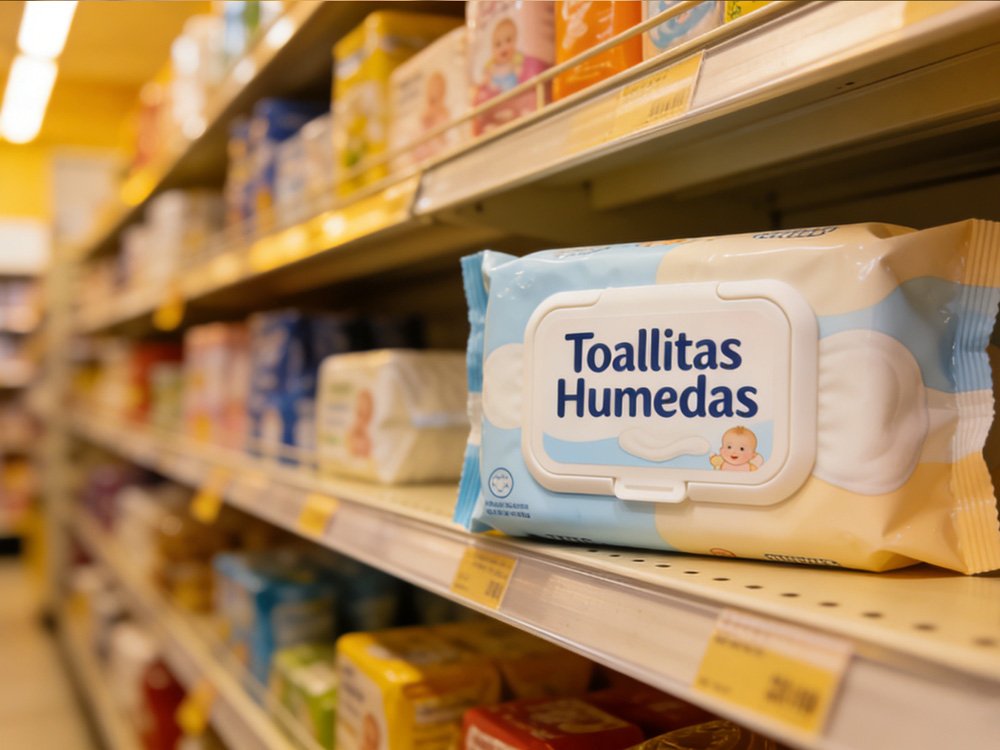
Imagine this: Your wipes are perfect. Your certifications are flawless. But the container is seized. Why? Because you used the word “Fragrance” instead of “Fragancia” (Spanish) or “Fragrância” (Portuguese).
Labeling is the #1 cause of minor customs delays. South American countries require:
- Full Ingredient Lists: Using the INCI (International Nomenclature of Cosmetic Ingredients) names.
- Local Importer Info: Your customer’s TAX ID and address must often be printed directly on the pack.
- Expiration Dates: Clearly visible and in a format the local market understands (DD/MM/YYYY).
Can you use stickers? Sometimes. But “Pre-printed” is always safer. Stickers can peel off in the humid hold of a ship, and if a customs officer sees a “naked” pack, they see a violation.
The 2026 Perspective: Sustainability and the “Plastic Tax”
We are moving into a new era. In 2026, South America is following the European lead on environmental regulations. Countries like Colombia and parts of Chile have introduced or are ramping up Plastic Taxes on single-use plastics.
Since many traditional wet wipes are made from a blend of polyester (plastic) and viscose, they are now subject to higher tariffs. As a manufacturer, we are seeing a massive shift toward Plastic-Free Wipes (wood pulp or bamboo).
To streamline your imports, you now need a Composition Certificate. This document breaks down the percentage of natural fibers vs. synthetic fibers. If you can prove your wipes are 100% biodegradable, you might not only save the planet but also save thousands of dollars in taxes.
Logistics: The “Full Container Load” (FCL) Advantage
Why do we recommend FCL for South America? Because “Less than Container Load” (LCL) cargo gets handled too much. Every time someone moves your pallets to get to someone else’s, there is a chance for a box to break or a document to get lost.
In the South American supply chain, consistency is king. Shipping a full container allows you to seal the doors at our factory and have them opened only by the customs officer or your customer. It reduces the variables in an already complex equation.
Conclusion
Streamlining your wet wipe imports to South America isn’t about finding a “secret shortcut.” It’s about professional preparation. It’s about choosing a manufacturer that understands the difference between an ANVISA registration and an INVIMA notification. It’s about having your “Golden Folder” ready before the ship even leaves the port.
The LATAM market is booming. From the bustling pharmacies of São Paulo to the supermarkets of Bogotá, the demand for high-quality, convenient hygiene products is at an all-time high. Don’t let a missing certificate stand between you and that growth.
At the end of the day, your customer doesn’t care about your paperwork—they just want a high-quality wipe that is safe for their family. By mastering the “boring” stuff like GMPs and MSDS reports, you ensure that the “exciting” stuff—your brand’s success—becomes inevitable.
Unique FAQs
1. Does every South American country require the FSC to be Apostilled?
Not all, but it is a “best practice.” Countries that are members of the Hague Convention (like Argentina, Chile, and Brazil) recognize Apostilles. It is much faster than traditional embassy legalization. Always check with your local customs broker first.
2. Can I use my European or US FDA certificates for South America?
They are excellent “supporting” documents and build massive trust. However, they do not replace local registrations like ANVISA or INVIMA. Think of them as a “letter of recommendation” rather than a “visa.”
3. What is the most common reason for wet wipe containers being rejected in LATAM?
Inconsistent information. If your Invoice says “Baby Wipes,” but your COA says “Sanitary Wipes,” and your packaging says “Infant Cleansing Tissues,” customs will flag it for “misdeclaration.” Your terminology must be identical across every single document.
4. How does the 2026 Plastic Tax affect my import costs?
It varies by country. In some regions, you may pay a per-gram tax on the synthetic content of the wipe. Switching to 100% plant-based fibers can often offset the tax cost and allow you to market the product as “Eco-Friendly,” which is a growing trend in LATAM.
5. How long does the average registration process take for a new wet wipe brand?
Expect 3 to 6 months for a thorough registration in Brazil or Colombia. It requires patience. This is why we recommend starting the paperwork long before the first production run is finished.