
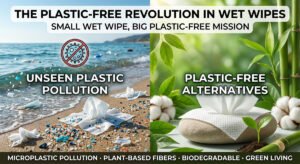



Which wet wipe material is best for your product? If you’re developing a household cleaning wipe, start by comparing how well the fabric holds up during wiping. For facial or baby wipes, pay closer attention to how the wet fabric feels on the skin and what’s in the lotion. And if your packaging will highlight a specific material, ask for the full fiber breakdown before approving the claim.
Most options you’ll encounter fall into three broad groups: synthetic fibers such as PET and PP, regenerated cellulose fibers such as viscose and lyocell, and cotton. These fibers can also be blended to achieve a particular feel, strength or price point.
Wet Wipe Materials at a Glance
| Material | Why choose it? | Common applications | What to check in samples |
|---|---|---|---|
| PET / PP | An option when wet strength and cost per wipe are priorities | Household and commercial surface cleaning wipes | Wet strength, lint and performance across repeated passes |
| Viscose / Lyocell | A soft, absorbent option for personal care | Facial cleansing, makeup removal and body wipes | Fiber percentages, softness when wet and even lotion distribution |
| 100% Cotton | A cotton feel and a clear fiber-content claim | Premium facial wipes and baby wipes designed for diaper changes | Wet strength, lint and cost per wipe |
1. PET and PP Wet Wipes for Everyday Cleaning
Polyester (PET) and polypropylene (PP) are commonly used in nonwoven wipes. They are worth sampling for household and commercial cleaning products where the wipe needs to hold together as it moves across a surface.
To compare samples, wipe the same type of surface with each one. Check whether the sheet stretches, bunches up, tears or leaves fibers behind. Fabric weight, fiber blend and construction can all affect the result, so two PET/PP wipes can perform differently.
For a wipe marketed for surface disinfection, check the finished product’s directions for suitable surfaces and how long the surface needs to stay wet. U.S. EPA guide to disinfectant directions
2. Viscose and Lyocell Wet Wipes for Softness and Absorbency
Viscose and lyocell are regenerated cellulose fibers, commonly made from wood-derived cellulose. They’re worth considering for facial cleansing, makeup removal and body wipes when you want a soft feel and good lotion absorption.
Ask for the exact fiber percentages when comparing samples. A 100% viscose wipe and a viscose–polyester blend are different specifications. To compare the fabrics fairly, sample them with the same lotion and sheet size, then check how they feel when wet, how evenly they hold the lotion and whether they leave lint after wiping.
3. Cotton Wet Wipes for a Distinctive Cotton Feel
A 100% cotton substrate can suit a facial or baby wipe range built around the feel of cotton and clear material labeling. If you put “100% cotton” on the pack, make clear that it refers to the wipe fabric. The lotion has its own ingredient list.
For baby wipes or products intended for sensitive skin, evaluate the finished wipe. Check the lotion ingredients, whether fragrance is added, the product’s microbiological quality and the intended use on the label. When comparing cotton with viscose or lyocell, test the wet samples for softness, lint and strength before deciding whether the cotton option fits your target price. FDA guide to disposable wipes
What Should You Check Before Launching in a New Market?
- European Union: Confirm the full fiber composition before finalizing artwork. Pre-wetted personal care and household wipes that contain plastic and fall within the EU’s single-use plastics rules require a packaging mark. European Commission guidance on packaging marks
- United States: Define the intended use early. Personal cleansing wipes and surface disinfecting wipes are regulated differently. If you plan to make a biodegradability claim, check that the evidence supports the wording and the conditions in which the wipe is typically disposed of. FDA guide to disposable wipes · FTC Green Guides summary
- Saudi Arabia: For personal care wipes, confirm Arabic labeling details with your importer before printing. If your wipes will be distributed through travel or outdoor retail channels, include seal integrity, moisture retention and ease of dispensing in your warm-storage tests. Saudi Food and Drug Authority labeling guidance · FDA guidance on wipe storage
Are Plant-Based Wet Wipes Flushable?
Plant-based describes where the material comes from. Flushability depends on how the finished wipe behaves in a drainage system. A cotton or viscose fiber claim alone doesn’t establish that a wipe can be flushed. Dispose of ordinary baby and household cleaning wipes in the bin. U.S. EPA guidance on sewer blockages
Choosing a Material for Your Private-Label Wet Wipes
Start with what you want the customer to experience. For a kitchen wipe, that might mean a sheet that holds together across a countertop. For a facial wipe, it might mean a soft sheet that leaves little lint. Test samples against that use case, then compare the cost per finished wipe.
Request a quote or samples for your wet wipe project. Share your target market, intended use, sheet size, wipes per pack and estimated order quantity so we can discuss suitable materials and packaging options.